
Features · Making the show
Partly metal, partly real: making SilverHawks
The show runner and head writer of ThunderCats, and then of SilverHawks, on being handed Jules Bass's idea and a stack of Mike Germakian designs, and building the successor show around a galaxy with a fence, space with day and night, and characters who bordered on the ludicrous.

You’re sitting in your office with a stack of ThunderCats scripts to edit and, even though the pressure has eased, you’re wondering how to get through it all, because the scripts aren’t the only thing on your desk! In walks Jules Bass with some initial designs from the supremely talented Mike Germakian. He tosses them onto your desk. “SilverHawks,” he says. “The next show. Your next show. Partly metal, partly real.” And then he’s gone, and you flick through the designs. They’re graphic, clear and inspirational, and maybe this is the opportunity you’ve been waiting for: to take a show from its earliest, most basic concept and develop it into something different — and into ThunderCats’ successor. Aside from the creative challenge, there’s an intimidating underlying question: how in the Galaxy of Limbo are you going to match the success of that phenomenon?
And so the process begins.
I’m clearly on record as saying that SilverHawks was and is particularly special to me because it was “my” show, whereas I inherited ThunderCats when the foundations were already laid by the original talent of Len Starr. Scripts had been written. A pattern set. Lee Dannacher was already the creative cop. Bernie had composed and recorded his stupendous music library. The first shows were being recorded by our supremely professional but sometimes batshit engineers. Masaki’s astonishingly talented animation crews were at work, often sleeping under their desks to keep up with the Rankin/Bass schedule.
When I transitioned from just another writer to the ThunderCats story editor — in many respects, effectively, the showrunner — I was extraordinarily lucky to be given such a free hand. That was a mark of Rankin/Bass — that if they believed in you they let you go with minimal supervision and a very open mind. While that freedom was repeated on Fox’s Peter Pan & the Pirates, thanks to Sidney Iwanter and Margaret Loesch, it’s rare, and I’m forever grateful for the Rankin/Bass experience.
Sure, there were difficult moments but, for me, by and large, a happy few years.
Jules’ basic idea — and for all that I and everyone else in R/B put into the show, that basic partly metal/partly real concept was entirely his — his idea was so wild that I couldn’t help myself. I had to take it to bizarre places. A galaxy with a boundary “fence.” Space with day and night. Was it a vacuum? Obviously not because the characters neither exploded nor imploded — nor boiled in space suits! — and could breathe with no atmosphere. But they could fly, and didn’t that require an atmosphere? Characters that bordered on the ludicrous but somehow maintained credibility and a whacko humanity.
At least, that and much more silliness was how I saw it, much to Masaki Iizuka’s shock and near-disgust! He was Pacific Animation Corporation’s boss, the producer of so much of Rankin/Bass’s content. A wonderful, charismatic and funny man, sadly now roaming Limbo Galaxy. Or perhaps happily roaming it despite his vehement arguments against my inexplicable logic and despite his later loathing of all the toy-driven ancillaries. (To this last comment, for him the basic characters plus TallyHawk were quite enough. He was right, of course, but neither he nor I had influence over the production/finance/distribution contracts, and it must be said that the Kenner executives were smart and empathetic.)
The bible written and pilot written, and Mike’s designs in PAC’s hands to convert into practical animation, we were off and running. The writers and designers, the sound crew, the actors — all chosen from the usual suspects.
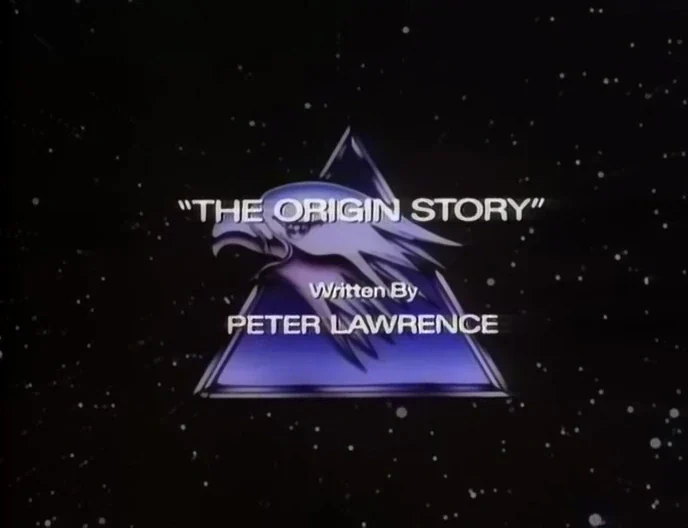
The schedule ramped up. The first storyboards came back from Japan, and Jules had his customary start-of-show fits. He was particularly disappointed in the handling of Stargazer (my favourite character) and, again, he was right. This was one of the very few “angry” meetings that I remember (always excepting the Street Frogs pitch in which he lost his mind) but it put the show on track, and now it was down to us to handle the weird, wild and wonderful characters and situations that the development process tossed into the mix.
Ahhh — MonStar! Another great character for me to write. Probably too much of an extension in character of Mumm-Ra, my ThunderCats favourite; but in putting MonStar together at least no one could accuse me of Satanism.
Zeek and Seymour! I surely wrote — or approved — “You wanna buy a fish?” too many times.
Stargazer! What an alter ego! I loved him for the channelling of such as Raymond Chandler, in spirit if not in dialogue; and I believe Bill and Len loved him for his echoes of the comic strips for which they were so famous.
The world of those ’80s shows has long gone. Can it come back? The way we consume our entertainment is so very different today and shortening attention spans don’t tolerate 22-minute stories. That doesn’t mean we give up our reboot efforts. They simply require more determination and as much support as we can garner from people like you.
And now I spend a lot of time in South America where I discovered SilverHawks is huge. Spain, too. Maybe even bigger than ThunderCats. Something found in translation?

★ DISCUSSION
Join the conversation.
Comments below are mirrored on the SilverHawks.tv forum. Sign in once, post anywhere.